

By Victoria Williams
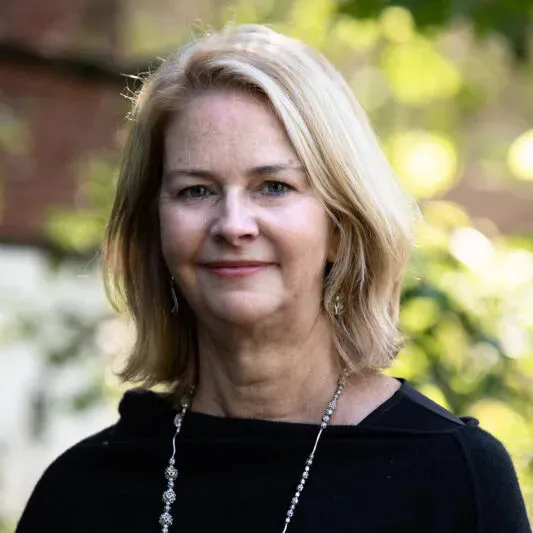
William Peace’s first semester with a new president, Lynn Morton prompted the Peace Times to sit down with Madam President Lynn Morton for an interview. While her presence here at William Peace University won’t be more than two years; as she’s our interim president, she did not let the title diminish her role or what she intends to do for Peace.
“Essentially I am here to get this university as ready as possible to attract a long time leader. As much as I love it here, I’m ready to take the next chapter, so I’ve got two years which is plenty enough time to get to know a place. To keep it strong, thriving and to use whatever influence I do have to help recruit the next President.”
Background
President Morton is a North Carolina native, born in Gastonia and raised in Chapel Hill. She followed in her fathers footsteps as an alum at the University of Chapel Hill North Carolina. Similar to her mother, she gravitated toward a career in education.
After finishing school, she went on to immerse herself in the world of higher education. She was Provost and VP for academic affairs when she left Queen’s University to be the president of Warren Wilson College for five years. This is where she earned the Order of Long Leaf Pine award, an award that’s given to those who have committed 30 years of service to the community of North Carolina.
DEI
One of the major topics of discussion in American society is diversity, equity, and inclusion initiatives and how they are on the decline nationally. Morton opened up about her experience in navigating this topic, connecting back to her days growing up.
“Back in those days we were kind of divided into groups,” said Morton. “There were what we called the farm kids whose family owned large parcels of land. Then there were university kids. Our parents were administrators, doctors, who worked for the hospital, or were faculty members. And then there were folks whose parents worked for the university in different capacities, very often in service industries.”
It’s this blend of economic classes that allowed for Morton to understand how varying backgrounds come together to offer much needed perspective; this is especially critical at a time when DEI initiatives have become controversial.
“I think that at the state level and probably across most of the country, we’re seeing some backlash,” she said. “I do come from a progressive perspective, that’s who I am so I try to be as balanced and fair and intellectual as I can be.“
Morton’s background of being immersed with different groups helped her acknowledge the gap in how people think about diversity.
“From my perspective we went through a very important and necessary racial reckoning in 2020. A lot of people learned a great deal about diversity, equity and inclusion.”
“By 2020”, Morton is referring to George Floyd’s death with the events that shined light on the treatment of black and brown people. While his death is significant for many because of the protests that occurred during that time, there seems to now be a ricochet effect years later, in terms of the response from businesses, corporations, and universities alike.
“That was good but I think now, at the state level for example, you’re seeing a distancing from what they consider to be political. I think that independent colleges and universities have a real opportunity to do things the way they want to do it”, Morton continued
Ideas about higher ed
Morton is optimistic about Peace and its incoming students. She explained the way she naturally gravitated towards being an administrator; a role that directly impacts students.
“Every single semester I taught first year writing. And that became my area of expertise. I love first year writing. One of my first jobs as an administrator was director of the first year writing program. I really grew a lot in that role and felt a passion for changing a program to benefit students on a large scale”, she expressed.
The time she spent working with first year students allowed her to grow an affinity to them.
“That moment when you leave high school and if you’re fortunate enough to go to college is so critical in that first year,” she proclaimed.
Her ideology is not solely based on being an observer of the classroom, but comes from first hand experience of decades in varying roles that directly deal with students.
“College teaching is so much a part of who I am that I think a lot of people assume administrators have spent minimal time in the classroom,” said Morton. “If any, I’ve spent 30 years in a classroom, a lot longer as a teacher than an actual administrator. My first administrator jobs were connected to students. Everything I did was in academic affairs.”
President Morton boasts an extensive career in higher education. She worked for Queens University of Charlotte in many positions; first as a faculty member in the English department, then Chair of the same department, to Associate Vice President of Academic Affairs, to eventually being the Dean of the College of Arts and Sciences.
“With every step the thing I wanted to do was to make a difference and I knew I could make a difference as a professor; that was my life’s work. But then I started finding ways that I could make a difference when I could influence policy,” said Morton.
While, examining the list of pathways she could go down after a long career, she expresses how she landed in college presidencies.
“I didn’t really have aspirations. My aspiration was to be a college professor, and then my aspiration was to make a difference as much as I possibly could. Then my aspiration after a few years as a provost, I was thinking, what do I want to do now? I chose to apply to college presidencies.”
Coming to Peace
After leaving with the success of Warren and a slew of accomplishments, Morton had planned on retiring, but after two years in retirement Peace had other plans for her.
“It takes a lot of focus and a lot of energy and I think I’m ready to retire. Although frankly I felt a little young to retire; I have a lot of energy”, she said.
And as luck would have it, Dr. Ralph and President Morton were old colleagues; Morton worked with Dr. Ralph at Queens University of Charlotte, for nearly 15 years. She even mentions how she was at his inauguration when she was provost at Queen’s University and Dr.Ralph was on the leadership team for William Peace.
“He asked if I would consider serving on the board of trustees, because the board tries to have people from all walks of life. So I had the academic background and there wasn’t anyone who had an academic background like mine. So I came to the board last year and I fell in love with this place”, she expressed.
She continues to explain the process of finding a President for a university, which means going through an arduous two year search process that will be conducted next fall. The search is made up of a committee that usually works with a third party firm, due to its ability to have a wider scope for applicants.
The process continues with the search committee and search firm working in tande


m to scout finalists for the position. Once they’ve identified their finalist, the students get the opportunity to hear the potential president speak. The process takes about one year to complete, but two years in its totality.
Goals for Peace
“While I’m here I would like to work on having us better known. Nobody wants to be a well kept secret. We have a lot of people who love and support Peace. It’s such a special place I want to make sure everyone knows about it,” proclaimed Morton.
She describes some of the marketing initiatives and objectives she’d like to explore while being at Peace.
“I’ve been thinking a lot about that and working with our marketing department and how we can leverage social media. We do that already but we can always do more, along with our name recognition; it could be greater,” said Morton.
In this greater push towards progression, she hopes to instill a new position for DEI.
“Internally I think it’s important to mention that we are now doing a search for an executive director for diversity, inclusion and belonging.”
It’s a strategic position that’s designed to bring the values to faculty, students and staff.
The position of executive director of diversity inclusion and belonging was put together by President Morton, the leadership team and the human resources department.
“You can have the best ideas and vision in the world but you’re not gonna realize that vision unless you plan for it and hold ourselves accountable for success in it,” Declared President Morton.”
Photo Courtesy of William Peace University